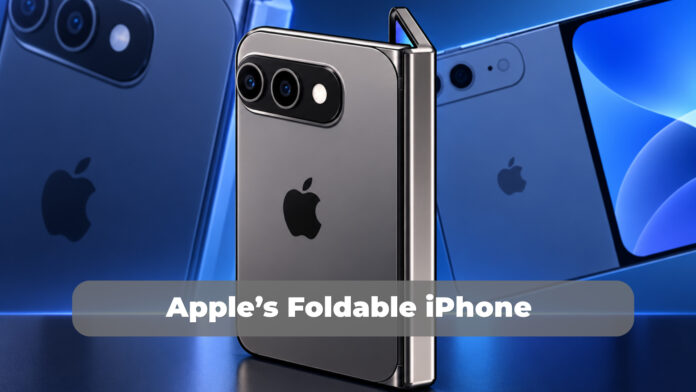
Apple has just delivered one of its most significant product launches in years, and the Apple event 2026 lineup turned out to be even more ambitious than the leaks suggested. Alongside the iPhone 18 Pro and iPhone 18 Pro Max, Apple finally entered the foldable-phone market with the new iPhone Duo, while the Apple Watch Series 12 received a substantial health-focused upgrade.
The September 9 “Surprise and Shine” event also marked the first major Apple keynote led by new CEO John Ternus. More importantly, it signals a shift in Apple’s hardware strategy, with premium devices taking center stage while the standard iPhone 18 appears to be moving to a later release window.
Apple Event 2026: What Apple actually launched
The biggest Apple event 2026 announcements can be grouped into three major hardware categories:
- iPhone Duo: Apple’s first foldable iPhone
- iPhone 18 Pro and 18 Pro Max: New flagship smartphones powered by A20 Pro
- Apple Watch Series 12: A health-focused smartwatch with a new S11 chip
Apple also introduced the Apple Watch Ultra 4 and AirPods 5, while iOS 27 is scheduled to arrive on September 14.
Interestingly, Apple did not announce a standard iPhone 18 at the Apple event. Reports before launch had already suggested that Apple could split its iPhone release schedule, pushing the more affordable models into 2027. That prediction has now become one of the defining stories of the Apple event 2026 launch.
iPhone Duo is Apple’s biggest surprise
The headline product of the Apple event 2026 is undoubtedly the iPhone Duo.
After years of rumors, Apple has finally produced a foldable iPhone. Unlike a compact flip phone, the Duo uses a book-style design. It has a 5.4-inch outer display for conventional smartphone use and opens into a much larger 7.6-inch inner screen. Apple says the unfolded device is its thinnest iPhone yet.
The hardware is distinctly premium. Apple uses a Grade 5 titanium frame and a precision hinge, while the foldable display receives a special nano-texture treatment designed to reduce reflections and make the crease less distracting.
Inside is the same A20 Pro processor used by the iPhone 18 Pro models. The phone also uses a dual-battery architecture and a custom vapor chamber for thermal management.
The camera setup includes two 48-megapixel rear cameras, while the foldable design enables new ways to take photographs and record video. Apple has also added Touch ID to the side button rather than using Face ID.
For Indian buyers, the pricing makes the Duo a very different proposition from conventional iPhones. It starts at ₹2,99,900 for 256GB, with higher-capacity versions reaching ₹4,49,900. Pre-orders begin October 16 and sales start October 23.
That price makes the iPhone Duo more of a technology showcase than a mainstream upgrade. But its arrival matters because Apple is now competing directly in a category dominated by Samsung, Google and Chinese manufacturers.
iPhone 18 Pro Max gets serious camera upgrades
The iPhone 18 Pro Max remains Apple’s conventional flagship, and the Apple event 2026 brought several upgrades that target photographers, creators and power users.
The phone retains a 6.9-inch display, while the smaller iPhone 18 Pro uses a 6.3-inch panel. Both are powered by the new A20 Pro chip and feature a redesigned vapor chamber aimed at sustaining performance during demanding workloads.
The biggest camera change is the introduction of a variable-aperture 48-megapixel main camera. This gives the camera system more control over how much light reaches the sensor and should provide greater flexibility when shooting in different lighting conditions.
The phones also feature 48-megapixel ultra-wide and telephoto cameras, alongside a smaller Dynamic Island and Apple’s latest computational photography features.
Apple claims the iPhone 18 Pro Max delivers its biggest battery-life improvement ever for an iPhone, helped by both the larger battery and improvements to the A20 Pro platform.
In India, the iPhone 18 Pro starts at ₹1,64,900, while the iPhone 18 Pro Max starts at ₹1,79,900. Storage options range from 256GB to 2TB.
Compared with the iPhone 17 Pro generation, this is less about radically changing the external design and more about improving the areas where flagship buyers notice differences: cameras, sustained performance and battery endurance.
A20 Pro is becoming Apple’s performance centerpiece
The Apple event 2026 also highlighted how important Apple’s silicon strategy has become.
The A20 Pro is built using a 2nm manufacturing process and powers both the iPhone 18 Pro family and iPhone Duo. That means Apple’s first foldable does not launch with a cut-down processor simply because of its form factor.
This is particularly important ahead of the Apple event, because foldable phones have traditionally had to balance thin designs, thermal limitations and battery capacity. Apple’s use of a vapor chamber and dual-battery system suggests the company has designed the internal architecture around those challenges rather than treating the foldable as a conventional iPhone with a flexible screen.
For buyers, however, the real benefit will depend less on benchmark numbers and more on sustained performance, battery life and how well iOS 27 takes advantage of the larger foldable display.
Apple Watch Series 12 focuses on health
The Apple Watch Series 12 was the quieter but potentially more useful announcement from the Apple event 2026.
Apple has introduced a new Health Sensing System alongside its S11 chip. The watch performs higher-frequency heart-rate and heart-rate variability measurements, which feed into a new readiness score designed to provide a clearer picture of recovery and daily condition.
The Series 12 also introduces new case options, including ceramic, while aluminum models receive Ceramic Shield 2. Sizes include 42mm and 46mm.
Apple is increasingly positioning the Watch as a health and fitness platform rather than simply an iPhone companion. The new health measurements, workout improvements and upcoming intelligence features reinforce that direction.
In India, the Apple Watch Series 12 starts at ₹56,900, with availability beginning September 18.
Why Apple’s 2026 strategy matters
The most interesting part of the Apple event 2026 may not be any individual specification. It is Apple’s decision to concentrate its September launch around expensive products.
The absence of the standard iPhone 18 changes the traditional annual upgrade cycle. Instead of putting every new iPhone into stores at roughly the same time, Apple appears to be spreading its releases across the year.
That strategy could have several advantages. Premium models generate higher revenue per device, while a staggered launch gives Apple additional opportunities to attract customers later in the year. Analysts had already linked the change to component costs and supply constraints, including pressure on memory.
It also creates a clearer product ladder. Buyers who want the newest technology can choose the Pro models immediately, while customers seeking lower prices can wait for the next wave of devices.
What buyers should make of the Apple Event 2026
For existing iPhone owners, the upgrade decision is more complicated than usual.
The iPhone 18 Pro Max makes the most sense for users who prioritize camera performance, battery life and sustained processing power. Owners of recent Pro Max models may find the upgrade less compelling unless those specific improvements matter to them.
The iPhone Duo is different. It is aimed at people who want an entirely new form factor and are willing to pay for it. At ₹2,99,900, it is clearly not positioned as an affordable alternative to a conventional iPhone.
Meanwhile, the Apple Watch Series 12 could be the more practical upgrade for users interested in fitness, recovery and health tracking.
The Apple event 2026 therefore offers three very different upgrade paths rather than one obvious flagship choice.
Also read: Apple’s Foldable iPhone May Arrive This Week: What Leaks Reveal
The bigger picture after Apple’s 2026 launch
The significance of the Apple event 2026 extends beyond the products announced on stage. Apple has entered foldables at a time when the category is becoming increasingly mature, and the iPhone Duo immediately gives the company a high-profile challenger to established foldable phones.
At the same time, the iPhone 18 Pro Max shows Apple is still refining the conventional smartphone rather than abandoning it. The variable-aperture camera, A20 Pro processor and battery improvements are evolutionary upgrades, but they target areas that matter in daily use.
The Apple Watch Series 12 follows a similar philosophy, pushing deeper into health monitoring and personalized insights.
That combination could define Apple’s next phase: radically new hardware at the top end, increasingly sophisticated health and AI features across its ecosystem, and a more carefully staggered iPhone lineup.
The Apple event 2026 ultimately delivered more than another annual iPhone refresh. The iPhone Duo marks Apple’s first serious move into foldables, the iPhone 18 Pro Max strengthens its traditional flagship, and the Apple Watch Series 12 expands its role as a health device. The real test now begins when these products reach customers—and whether Apple’s premium-first strategy can justify the prices attached to them.